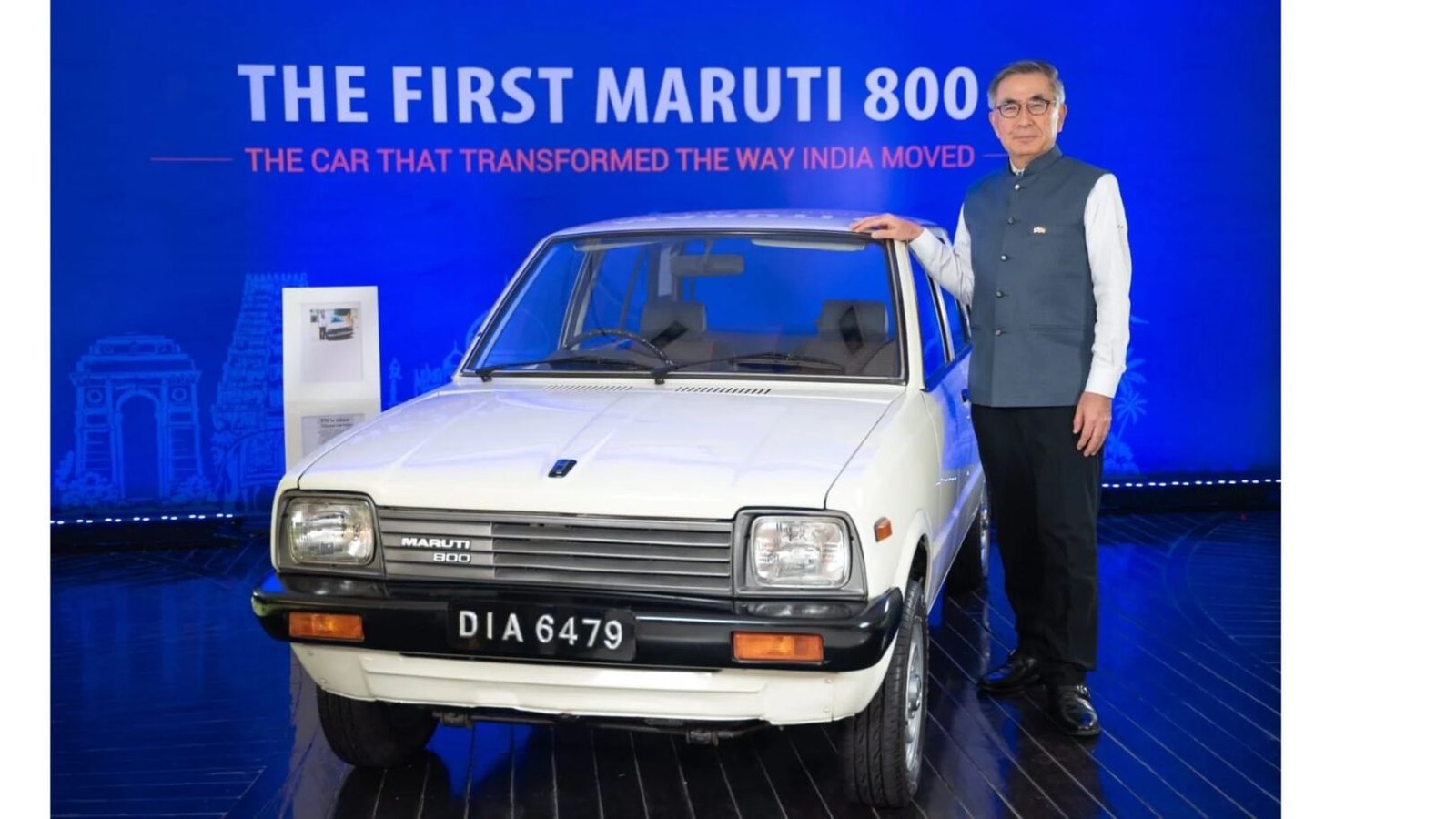
The iconic hatchback has been selected among 21 vehicles worldwide for its contribution to India’s motoring heritage and the transformation of everyday mobility.
The Maruti 800 has become the first and only Indian car to receive the Fédération Internationale des Véhicules Anciens (FIVA) World Vehicle Heritage Award. The recognition places the iconic hatchback among 21 historic and culturally significant vehicles selected from across the world for their contribution to automotive heritage.
Announced on November 16, 2026, the inaugural award recognises vehicles that have shaped national identities, transformed everyday mobility and contributed to industrial development. The Maruti 800 was acknowledged for making personal mobility more accessible in India and influencing the country’s automotive industry.
The other award-winning vehicles represent countries including the US, Brazil, Germany, France, Austria and Slovenia. Maruti Suzuki said the Maruti 800 is the only vehicle from India to feature among the 21 recipients.
Maruti 800’s Role in India’s Automotive Industry
Launched as India’s first car manufactured by Maruti Suzuki in December 1983, the Maruti 800 played an important role in making car ownership accessible to a wider section of Indian buyers.
According to Toshihiro Suzuki, President of Suzuki Motor Corporation, the company initially began manufacturing around 40,000 cars annually. Over the following three decades, production of the Maruti 800 crossed 2.9 million units.
The model also marked an important milestone in India’s automotive exports. The first Maruti 800 was exported to Europe in 1987, with Hungary, France and Belgium among the initial destinations. Maruti Suzuki’s export operations have since expanded considerably, with the company exporting more than 4 lakh vehicles annually to over 120 countries.
Maruti 800’s Impact Beyond Car Ownership
R.C. Bhargava, Chairman of Maruti Suzuki India Limited, said the car’s influence extended beyond the company’s manufacturing operations. He highlighted its contribution to the development of India’s automotive and component industries, along with the employment opportunities created through the growth of motorisation.
Bhargava also pointed to the Maruti 800’s social impact, noting that its reliability and ease of driving helped more women participate in economic activities.
He credited Suzuki’s decision to partner with Maruti and manufacture the SS80 with helping establish India’s capabilities in producing high-quality engineering products. The first Maruti 800 export to Europe in 1987 also demonstrated the potential of Indian-made vehicles in international markets.
FIVA’s New World Vehicle Heritage Awards
The FIVA World Vehicle Heritage Awards have been introduced to broaden the recognition of automotive history. Unlike traditional awards that often focus on rarity, prestige or monetary value, the initiative considers the wider cultural and industrial influence of vehicles.
FIVA is an international non-profit federation dedicated to historic vehicles and is a non-governmental partner of UNESCO. Its inaugural awards recognise vehicles that have made a lasting contribution to society and mobility.
The recognition for the Maruti 800 highlights the hatchback’s place in India’s automotive history, from its early role in expanding car ownership to its contribution to the country’s emergence as a major vehicle manufacturing and export market.