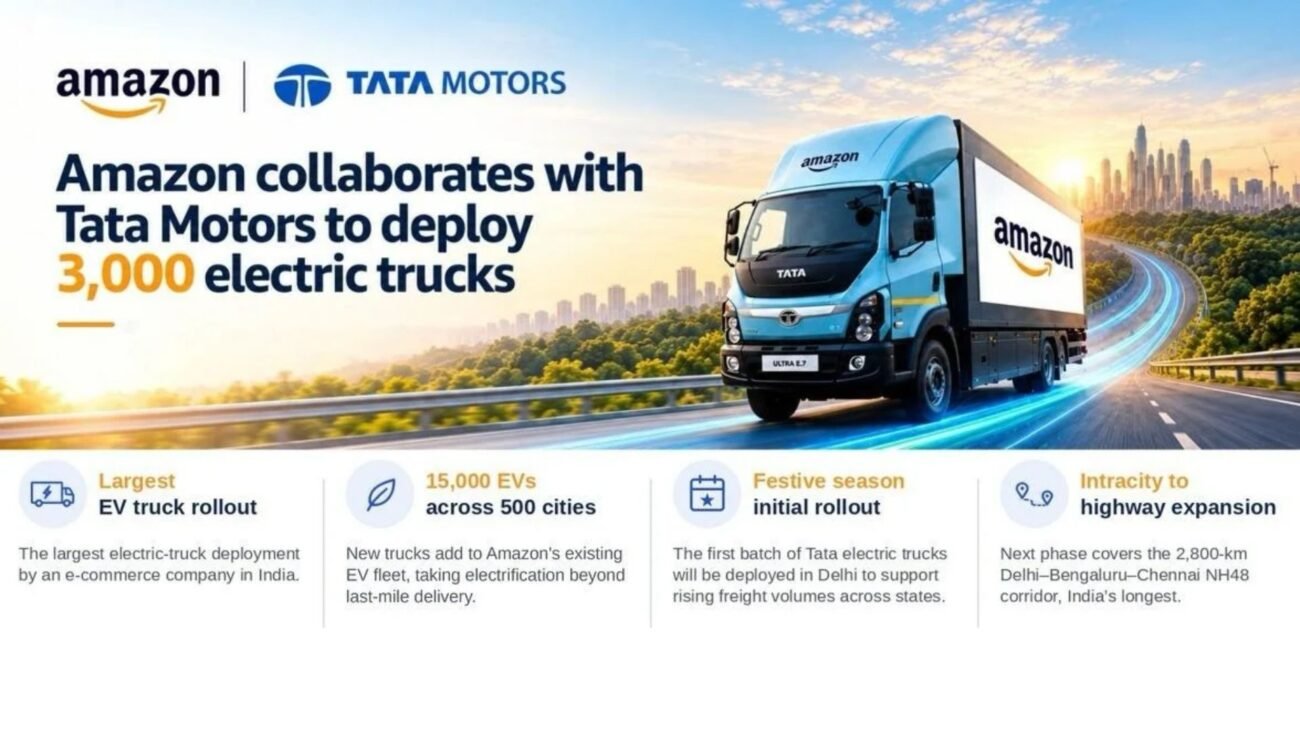
Amazon and Tata Motors will roll out 3,000 electric trucks across the e-commerce company’s logistics network, starting in Delhi during the festive season before expanding to major freight corridors.
Amazon has partnered with Tata Motors to deploy 3,000 electric trucks across its transportation network in India, marking a major step towards electrifying the e-commerce company’s middle-mile logistics operations. The rollout will begin in Delhi during the festive season, with the initial fleet supporting freight movement between facilities and across cities as shipment volumes increase.
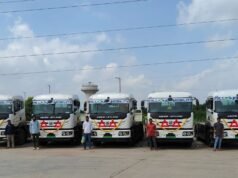
The companies announced the collaboration on October 27, 2026, with the first batch of Tata electric trucks flagged off in Delhi. The deployment is described as the largest electric-truck rollout by an e-commerce company in India and represents Amazon’s most significant effort yet to extend fleet electrification beyond last-mile deliveries.
Under the arrangement, Tata Motors will supply the electric trucks, while Amazon’s carrier partners will own and operate the vehicles.
Tata Ultra E.7 Electric Trucks to Lead Initial Rollout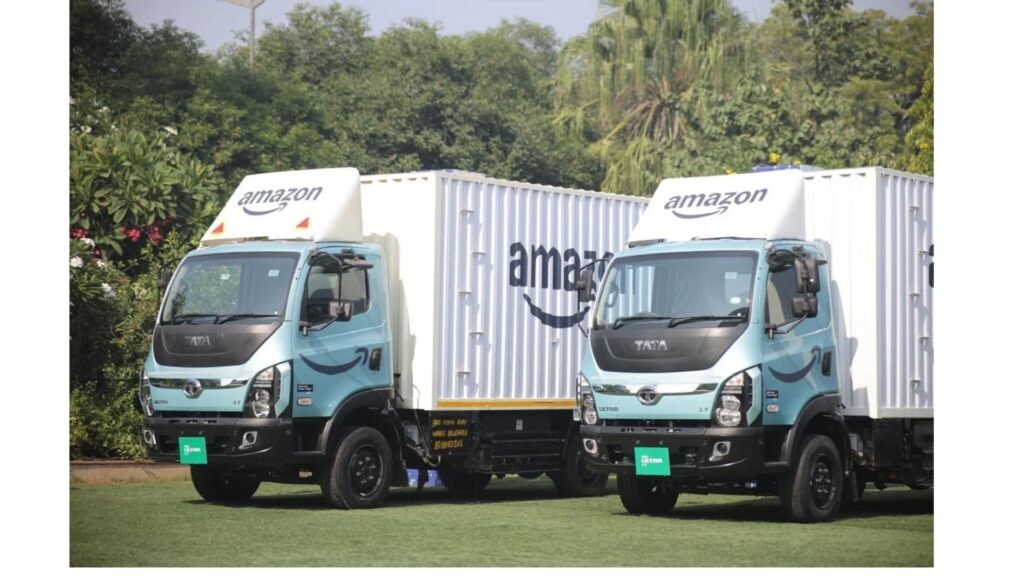
The initial deployment will use light- and medium-duty electric trucks from Tata Motors, including the Tata Ultra E.7. These vehicles will support Amazon’s middle-mile transportation network, moving customer shipments between logistics facilities and across urban routes.
The Tata Ultra E.7 features an integrated e-axle, CCS2 fast-charging capability and regenerative braking. It also comes with a new-generation crash-tested cabin equipped with high-voltage safety systems.
Tata Motors said the trucks are designed to offer lower operating costs and higher uptime, making electric freight transportation a more practical proposition for fleet operators.
The collaboration will extend beyond vehicle supply. Tata Motors and Amazon will work on supporting charging infrastructure, servicing and operational requirements to facilitate the integration of electric trucks into large-scale logistics operations.
Delhi–Bengaluru–Chennai Corridor in Focus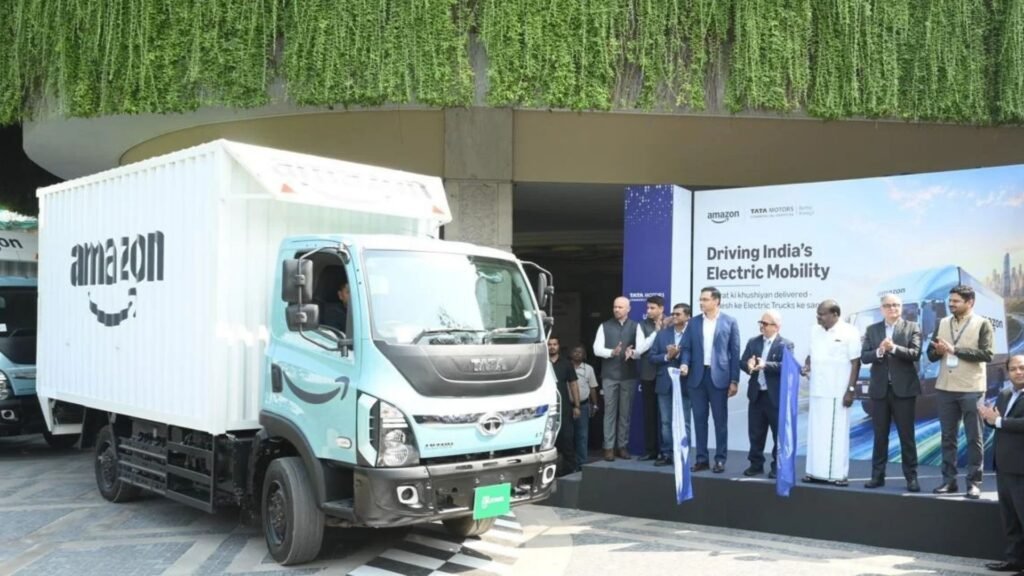
Following the initial rollout in Delhi, the companies plan to expand the deployment to major national highways. A key part of the initiative is the proposed electrification of the 2,800-km Delhi–Bengaluru–Chennai corridor along NH48.
Spanning seven states and connecting six major e-commerce regions, the corridor is intended to demonstrate how electric trucks can support long-distance freight movement at scale. Dedicated charging infrastructure will be required for this expansion, with charging infrastructure provider Yahhvi involved in developing supporting facilities.
Amazon said the initiative builds on its existing network of 10 charging yards developed with Yahhvi across India.
The rollout also comes amid policy support for electric commercial vehicles. Delhi’s 2026 EV Policy provides qualifying early adopters with incentives for the first 1,000 privately owned medium-duty electric trucks registered within three months of the policy’s launch, including an exemption from the city’s usual time-based entry restrictions for a decade.
Amazon Expands Its Electric Mobility Push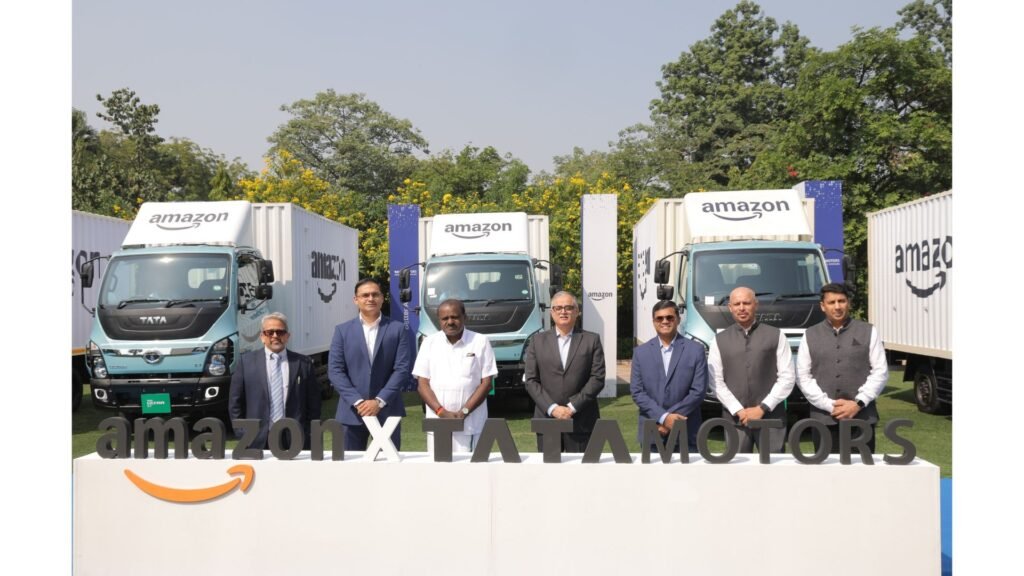
Amazon said it already has more than 15,000 electric vehicles operating across over 500 cities in India. The company aims to achieve net-zero carbon emissions by 2040, with transportation electrification forming part of its broader strategy.
Its initiatives include Laneshift, a programme developed with C40 Cities that piloted electric trucks on the Bengaluru–Chennai corridor and contributed to an evidence-based roadmap for zero-exhaust-emission trucks in India. Amazon’s Climate Pledge initiative has also introduced SUPEREV, a digital platform designed to bring together charging, vehicles, financing and renewable energy solutions for commercial electric vehicle adoption.
Tata Motors said growing localisation, affordability and total cost of ownership are helping electric trucks move beyond pilot projects towards wider commercial adoption.
The deployment of 3,000 trucks is expected to provide a large-scale demonstration of electric freight operations, while supporting the broader transition towards lower-emission commercial transportation in India.